

Movement of Mares Interstate

Stacey Silver • August 25, 2021

Requirements due to COVID restrictions

  With the start of the breeding season fast approaching, I wanted to provide you with an update on the latest protocols for the movement of mares across state borders. TBA has been working closely with state governments and liaising with the state associations to try to ensure breeders have options to get their mares interstate.
 
As I've mentioned previously, commercial carriers are well set up to move mares across borders and will be able to navigate any of the protocols that are in place.
 
However, for those of you wishing to move mares with farm-owned trucks or vehicles, you will be required to have the right permits and there will be a number of protocols you or your employees will have to follow.
 
It should be said that, since last year’s breeding season, state governments have tightened up the rules for movement between states. This is largely due to the increased transmissibility of the Delta variant of COVID-19.
 
It is important that any breeder moving mares across state borders follow the protocols and requirements of their permits closely. Any outbreak of the virus that was linked to the movement of mares would jeopardise the allowances that governments have made for our industry. 
 
Essentially, breeders have been given an allowance to use the freight permit system for travel into Victoria, Queensland and NSW. However, to qualify for this exemption, farms need to use a vehicle with a Gross Vehicle Mass of more than 4.5 tonnes. Nearly all trucks commonly used by breeders would meet this restriction, though many floats are unlikely to do so.
 
TBA strongly suggests breeders only use their own truck or, if using a float, have evidence that it has a Gross Vehicle Mass of more than 4.5 tonnes.
 

Transport Of Mares Between Victoria And NSW

 
Anyone wishing to transport a mare across the Victorian state border must comply with the following protocols: 
 
1. Apply For A Permit
 
If you a travelling from NSW, you must apply for a Specified Worker (Low Workplace Interaction) Permit. This permit will be required for anyone coming from an orange, red or extreme risk zone. Please note the whole of NSW is currently recognised as an extreme risk zone. 
 
2. Adhere To The Following Conditions
 
If you’re eligible for a Specified Worker (Low Workplace Interaction) Permit and you’ve been in a red or extreme risk zone (such as NSW) at any time after the red zone or extreme risk zone commencement time in the last 14 days, you must:
 
If a Victorian resident travelling for work outside Victoria:

  • quarantine at your accommodation when not working or while traveling for work
  • get tested for COVID-19 at least once every 3 days during the time the permit is valid
  • only leave your vehicle or the accommodation where you are quarantining when working to undertake the work that makes you eligible for the specified worker permit (e.g. driving and unloading), and to:
  • access toilet and bathroom facilities
  • pay for fuel
  • purchase essential items
  • purchase takeaway food and drink
  • depart Victoria from an airport, seaport or railway station
  • must not carry any other person as a passenger in the driver’s cabin of a vehicle while traveling for work outside of Victoria, other than for the purpose of providing specified work in an occupation included in the Specified Worker (Low Workplace Interaction) List
  • minimise contact with others when not traveling for work outside of Victoria
  • wear a mask indoors and outdoors whilst traveling for work outside of Victoria

If you are a non-Victorian resident in Victoria (i.e. Coming from a NSW farm for a cover in Vic)

  • quarantine at accommodation when not working
  • get tested for COVID-19 at least once every 3 days during the time the permit is valid
  • you must not carry any other person as a passenger in the driver’s cabin of a vehicle, other than for the purpose of providing specified work in an occupation included in the Specified Worker (Low Workplace Interaction) List
  • only leave isolation to undertake the work that makes you eligible for the specified worker permit (e.g. driving and unloading), and to
  • access toilet and bathroom facilities
  • pay for fuel
  • purchase essential items
  • purchase takeaway food and drink
  • depart Victoria from an airport, seaport or railway station
  • minimise contact with others when inside Victoria
  • wear a mask indoors and outdoors unless an exception applies
  • only remain in Victoria for the period of time necessary to provide the work.

Other conditions apply. These will be clearly listed on your permit and as part of your application. To get a permit, you must declare that you accept these conditions.
 
 
You can apply for the permit here.
 
3. Carry Copies Of COVID Safe Workplan And COVID Safe Freight Plan
 
At all times, drivers should carry of copy of your farm’s COVID Safe Workplan. They are also required to carry a completed COVID Freight and Transport Plan (they will need to complete one these for each separate trip). TBA have developed templates for your use:
 
 
COVID-19 Safe Plan Template For Farms
 
COVID-19 Safety Plan Template For Freight And Transport
 
4. Have A Permit To Enter NSW
 
The NSW government still requires those travelling from interstate for work to apply for a permit to enter the state. 
 
 
This can be applied for here.
 

Transport Of Mares Between Queensland And NSW 

 
Anyone wishing to cross the QLD state border will have to abide by the following rules and restrictions: 
 
1. Complete A Border Declaration Pass
 
Breeders who are QLD residents and wanting to transport mares privately across the NSW border (ie. not with a commercial transport company) or to any other COVID-19 hotspot, will require a valid Queensland Border Declaration Pass (Freight and Logistics – F Pass) to re-enter the state.
 
Breeders coming from a designated hotspot outside of QLD (such as NSW) wishing to transport a mare to a QLD-based stallion will also have to obtain a valid Queensland Border Declaration Pass (Freight and Logistics – F Pass).
 
 
You can apply for an F Pass here.
 
2. Adhere To Mandatory COVID-19 Testing 
 
If coming or returning from a COVID-19 hotspot (such as NSW), drivers will have to produce evidence of a negative COVID-19 test result received within 7 days prior to entering Queensland.
 
For QLD residents returning home, or if you are staying in QLD for an extended period of time, you must continue to be tested for COVID-19 on a rolling 7 day cycle until at least 14 days have passed since you have been in a COVID-19 hotspot outside of the border zone. Example: if your driver has evidence of a COVID-19 test four days prior to crossing the border, they must continue to be tested for COVID-19 every 7 days. This would mean that their next test would be within three days of arriving back in QLD and then every seven days after until 14 days have passed. 
 
3. Carry Copies Of COVID Safe Workplan And COVID Safe Freight Plan
 
At all times, drivers should carry of copy of your farm’s COVID Safe Workplan. They are also required to carry a completed COVID Freight and Transport Plan (they will need to complete one these for each separate trip). TBA have developed templates for you to use:
 
 
COVID-19 Safe Plan Template For Farms
 
COVID-19 Safety Plan Template For Freight And Transport
 
4. Keep Written Records
 
All drivers must keep written records of who they have come into close contact with while in QLD. If you are resident, you must keep the records for at least 14 days after returning home. These records should include: date, time, location and the person’s name and phone number.
 
5. Minimise Contact With Others
 
Queensland Residents: drivers who are QLD residents are not required to quarantine upon returning home but they must have no or minimal contact with the Queensland community while actively entering back and forth from COVID-19 hotspots ie. New South Wales. When travelling, they must only exit the vehicle to access rest stop facilities, refueling, and activities directly related to the purpose of the trip such as the unloading of a mare, or to meet required regulation activities such as workplace health and safety or fatigue management.
 
Non-Queensland Residents: while in QLD, non-residents must only remain in QLD for the time necessary to complete the essential activity, have no or minimal contact with the Queensland community while in the state and only exit the vehicle to access rest stop facilities, refueling, and activities directly related to the purpose of the trip such as the unloading of a mare, or to meet required regulation activities such as workplace health and safety or fatigue management. You must only stay in overnight accommodation when necessary to fulfil fatigue management requirements. No recreational activities are to be undertaken while in the state.
 
6. Have A Permit To Enter NSW
 
The NSW government still requires those travelling from interstate for work to apply for a permit to enter the state. 
 
 
This can be applied for here.
 
It is worth noting that these protocols may change during the course of the season. TBA will endeavour to keep you informed of any relevant updates but we also encourage you to monitor the state government’s websites (links below).
 
Please do not hesitate to contact us if you have any concerns.
 
Kind regards, 
 
Tom Reilly 
 
Chief Executive Officer 
Thoroughbred Breeders Australia
 
Links to interstate permits:


March 17, 2026
The body content of your post goes here. To edit this text, click on it and delete this default text and start typing your own or paste your own from a different source.
March 13, 2026
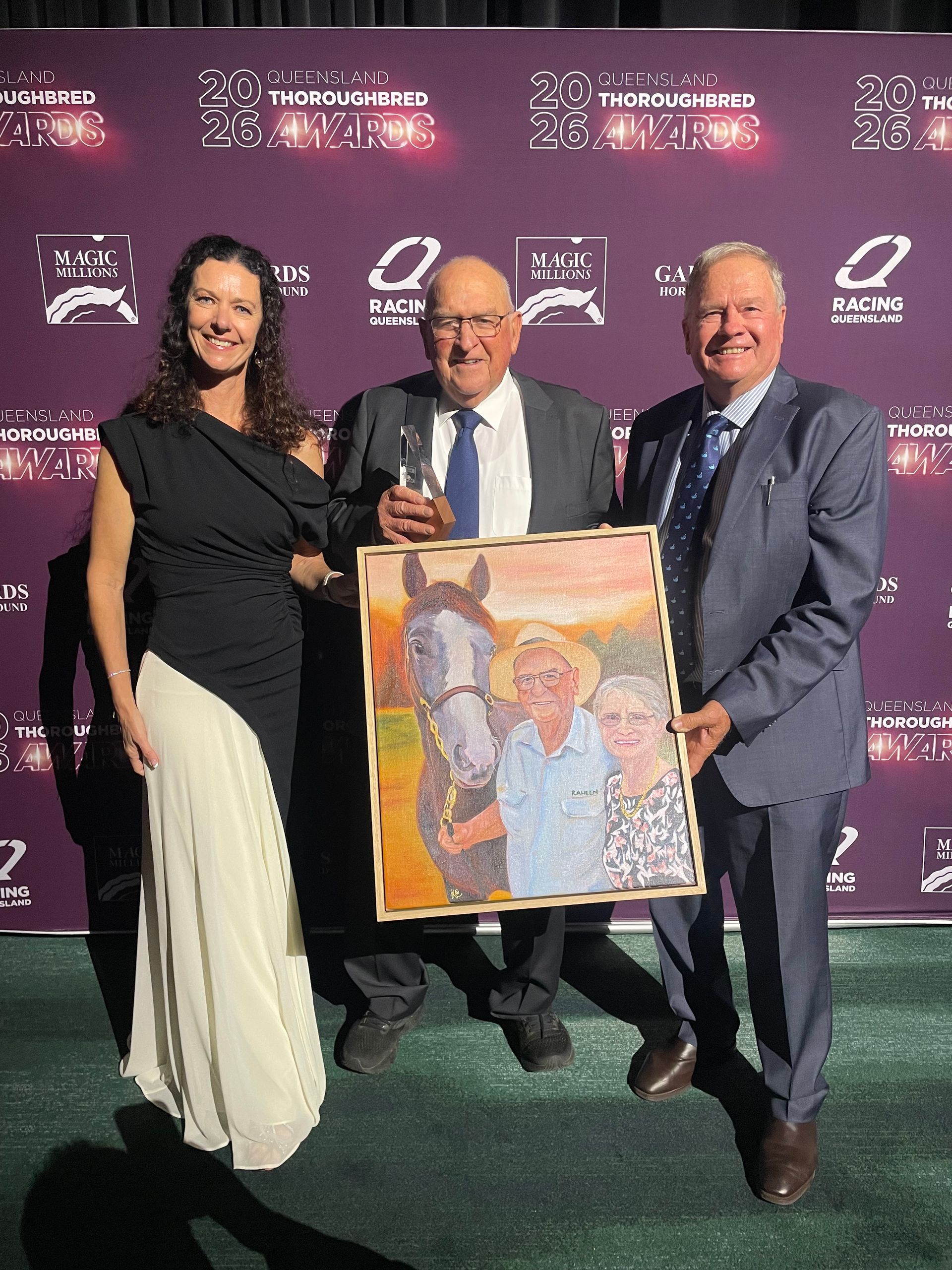
Revered Queensland thoroughbred breeder and long-time industry figure Basil Nolan will be honoured for his lifetime dedication to the code by being inducted into the Queensland Racing Hall of Fame. Nolan’s Hall of Fame induction recognises his decades of service to horse racing in the state, headlined by his deep commitment to Raheen Stud as well as his service to the Thoroughbred Breeders Queensland Association and Thoroughbred Breeders Australia. The 80-year-old was informed of his induction into the Queensland Racing Hall of Fame on Wednesday afternoon alongside a group of his long-time peers and friends, fittingly at the Magic Millions March Yearling Sale. Nolan grew up surrounded by horses and racing at his family’s famous Raheen Stud, based just outside of Warwick on the Darling Downs, where he joined his parents in its operation in 1963. Together with his wife Diane, he has expanded the complex into what it is today, standing in-demand stallions and producing generations of Queensland-bred racehorses while remaining firmly family-run. While looking after his business interests at home, Nolan always had his eyes on the wider industry’s prosperity. He first joined the committee of the Thoroughbred Breeders Queensland Association in 1969 and later served as president from 1980 to 1991, before returning to the role in 2010. During his time in the position, Nolan helped drive a number of key initiatives aimed at strengthening the local breeding industry, which included enhancements to the Queensland Thoroughbred Incentive Scheme and Breeders Bonus scheme. He has also supported initiatives around horse welfare and rehoming retired racehorses during his time on the Queensland Off-The-Track Board. “It’s unbelievable – I truly never expected to be in the Queensland Racing Hall of Fame,” Nolan said. “It’s a great surprise and I’m appreciative of everybody who has made this happen. “It’s not just an honour for me, it’s for the thoroughbred breeders in Queensland and the people that make it up, alongside my wife who is my backbone.” Nolan has also been a strong advocate for the industry at government level, where he played a key role during equine influenza breakouts, as well as securing support for breeders during the devastating 2011 floods and COVID-19 pandemic. At a national level, Nolan has represented Queensland on the board of Thoroughbred Breeders Australia since its establishment in 2005 and has served as its president since 2014. In that role, he has helped ensure Queensland breeders maintain a strong voice in national discussions around marketing, expanding black-type racing opportunities and horse identification through microchipping and DNA testing. Racing Minister Tim Mander said Nolan was an iconic figure not just in Queensland thoroughbred circles but nationwide. “Basil Nolan is one of the most revered figures in Queensland racing and I couldn’t think of a more deserving inductee into the Queensland Racing Hall of Fame,” Minister Mander said. “I want to congratulate Basil and his family for their significant and ongoing contribution to the industry." Earlier in his career, Nolan also spent 22 years working as a bookmaker at Eagle Farm Racecourse, which gave him first-hand experience of the wagering side of the sport. That knowledge later proved valuable in discussions around race fields legislation and prize money distribution in Queensland. “Basil has made an enormous contribution to racing, not only here in Queensland but right around the country,” Racing Queensland Director Graham Quirk said. “Even at the national level since 2014 Basil has led the Thoroughbred Breeders Association, and at a time in life when other people would be putting their feet up, Basil is soldiering on fighting the good fight and fighting it hard. “Basil has a sense of determination, he gets right to the core of an issue, and he’s a fighter; those three ingredients make for good, strong leadership. “It’s hard to imagine that anybody will serve as president for 25 years of a state jurisdiction. That’s what Basil has done and that’s why he’s a very deserving Hall of Fame inductee.” Watch the announcement here
March 13, 2026
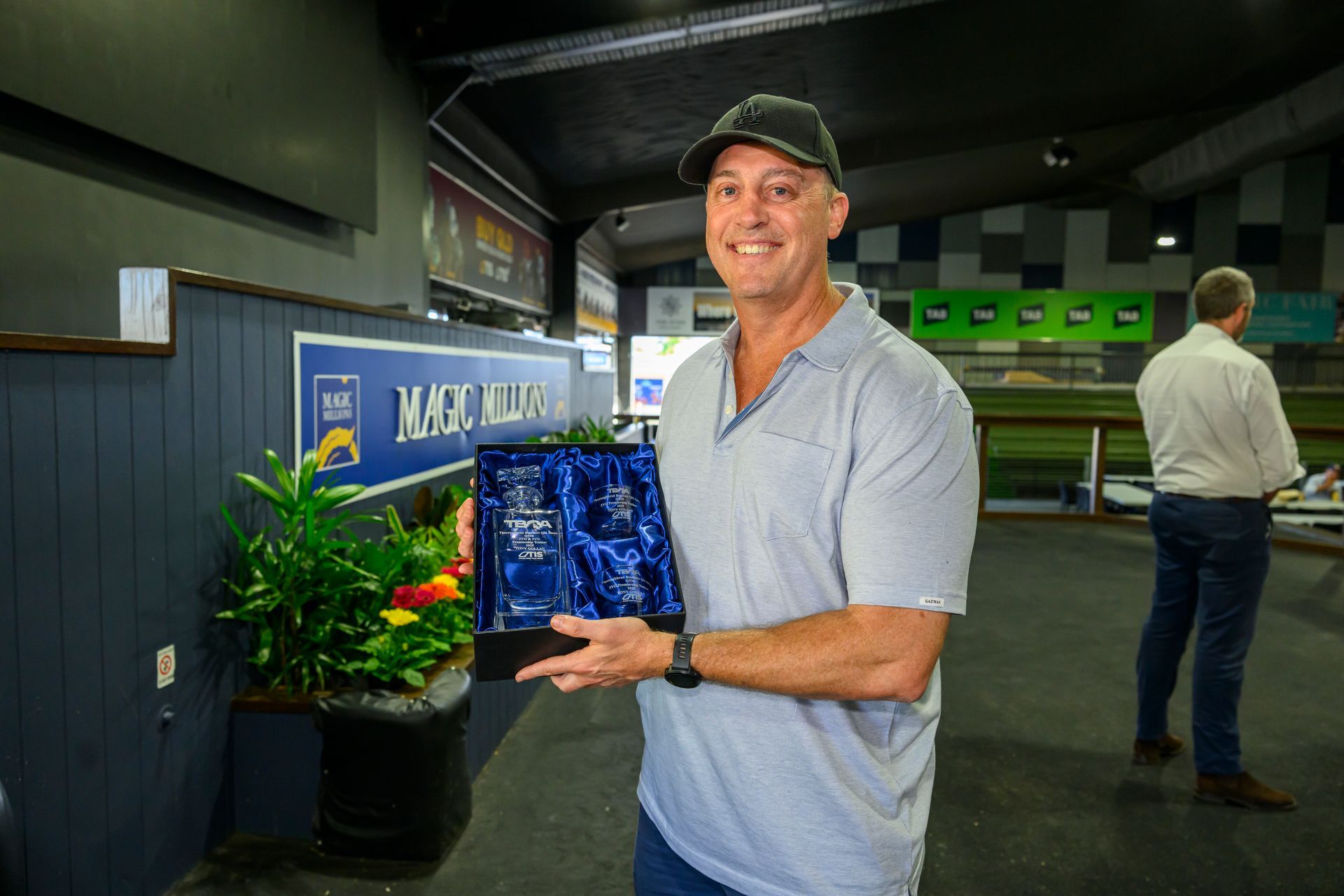
The annual Magic Millions TBQA Welcome BBQ, held on Wednesday afternoon, was once again a wonderful success, bringing together members of Queensland’s thoroughbred breeding and racing community in a warm and relaxed setting. With close to 300 vendors, owners and buyers in attendance, the event provided a fantastic opportunity for industry participants to reconnect, celebrate achievements and discuss the future of the industry. We were honoured to welcome Racing Minister Hon. Tim Mander, along with Racing Queensland representatives Graham Quirk, Lachlan Murray and Mitchell Jones, whose presence highlighted the importance of collaboration across the racing and breeding sectors. One of the highlights of the afternoon was the presentation of the 2025 QTIS Trainers’ Premiership to Tony Gollan. This remarkable achievement marks the first time in the history of the award that a trainer has won both the 2YO and 3YO premierships in the same season. It was a fitting moment for the industry to come together and recognise such an outstanding milestone. The event also provided the opportunity to celebrate another significant honour, with the announcement that TBQA President Basil Nolan will be inducted into the Queensland Racing Hall of Fame at the Racing Queensland Awards in August. This recognition reflects Basil’s long-standing dedication and contribution to the Queensland thoroughbred industry. The TBQA Annual General Meeting, following the BBQ, was very well attended, with more than 30 members participating in constructive discussions around several key issues affecting the industry. Topics included the ongoing decline in sales, foal ownership declarations and concerns around the transportation of livestock. Members also endorsed the adoption of the new and improved Model Rules, marking the first comprehensive review of these rules in more than 30 years. The updated framework represents an important step forward, modernising the association’s membership and administrative practices and positioning TBQA strongly for the future. The existing TBQA committee and executive were re-elected unopposed, reflecting the confidence members have in the current leadership team and their ongoing work on behalf of the industry. Overall, the Welcome BBQ and AGM proved to be a very successful series of events. We extend our sincere thanks to everyone who attended and contributed to such a positive and productive gathering, and we look forward to continuing to work together for the benefit of Queensland’s thoroughbred breeding industry.
March 13, 2026
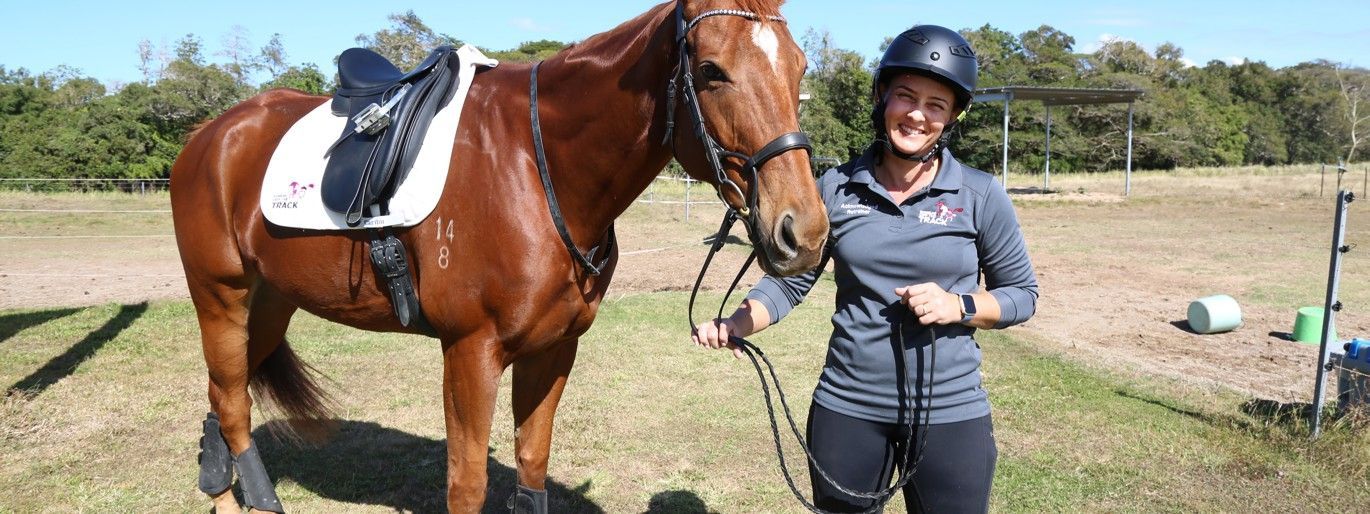
While he did not reach the same levels of his famous father, it is away from the racetrack in Far North Queensland where Dash of Black is having his greatest impact. The retired thoroughbred is the progeny of eleven-time Group 1 winner and Australian Racing Hall of Fame member Lonhro, who was sired by another champion galloper in Octagonal. Despite the strong lineage, Dash of Black did not enjoy the same success throughout a 41-start career that saw him notch three wins and nine placings across several North Queensland tracks. Retired in late 2016, “Dash” then stayed in the region and landed in the care of local horsewoman Claire Denzin in March 2018. “He's descended from some pretty good racehorses and studs, but he clearly took after his mum (Dash For Gretna) or a weird uncle,” Denzin said with a laugh. “I think his total winnings was about $35,000 and that includes one race which was a $10,000 win, so his return on investment was pretty low. “I got Dash off someone else after he had been retired for a while so he had actually had a decent let-down period of just being a horse in a paddock for a period of time.” Based in Mareeba, Denzin welcomed Dash as the first ever thoroughbred in her care, one of three she now has on her property. Admitting she did not know much about horses, Denzin quickly became accustomed to the now 17-year-old gelding’s relaxed nature. “I met Dash, and thought he had a kind eye and seemed like a nice horse,” Denzin said. “I then spent two-and-a-half years with everyone saying ‘that horse is going to kill you,’ and I thought no, you just have to learn how to ride him properly. “I certainly described Dash as hot, but he always had a kindness, and it was just that we weren't speaking the same language because I didn't understand. “And then I met a trainer who is actually now one of the Queensland Off-The-Track Acknowledged Retrainers - she was my showjumping coach and that helped a lot.” That trainer is Rebecca Henry, who was crowned the QOTT Acknowledged Retrainer of the Year at the 2023 Queensland Thoroughbred Awards. The Mount Garnet-based Henry is also a QOTT Approved Coach for the Subsidised Lessons Program, through which Denzin developed her skills. She said Henry’s tutelage had been invaluable in helping her develop her relationship with Dash. “I met Rebecca through going to a clinic, which happened to be at her property, and she said ‘yeah, I'll coach you, but you need to take on my advice, and learn how to ride a thoroughbred’,” Denzin recalled. “People had said they're just born to race and Rebecca taught me that they're intelligent and they're sensitive. “It’s so awesome that we have a coach who's in our region who is extremely experienced and does everything from having thoroughbreds on her property to horsemanship, showjumping, everything. “She really understands thoroughbreds and what they can do, and has a real passion for them. “Rebecca is also understanding of who these horses are and someone who really gets it - she's not trying to turn them into anything they're not. “It's about building understanding of who the horses are as individuals, as well their traits from their breeding, and building that real connection between horse and rider.” Denzin now refers to Dash as her “Mr Reliable,” with the pair chasing cows, competing in dressage and showjumping, and trail riding. The duo are also regular fixtures at the annual NuNu Melbourne Cup beach race and luncheon at Palm Cove in the Far North. The iconic event helps raise money for the Far North Queensland Hospital Foundation, with the 2025 Calcutta auction adding $12,000 to the overall $200,000 total. In one of the images of the day, Denzin was photographed celebrating her friend and fellow Subsidised Lessons Program participant Naomi Hogan crossing the line first on fellow off-the-track thoroughbred I’m Not Sure. It was an extra special run for the 13-year-old gelding who had been forced to take a break from showjumping early last year. “He came up lame at a competition early last year, so Naomi retired him, and then spent all year trying to figure out what was going on,” Denzin explained. “He had actually spent all year getting fat in a paddock, and he was actually just coming back into work before that. “So she'd been so worried all year, and then to have him feeling good and absolutely dominate that race…I was so stoked for her, and so stoked for him. “He was prancing around like he just won the Melbourne Cup! “Last year was my fifth year being involved in the event and we’re increasing every year, and constantly looking at ways to maximize the amount of money that can be raised and what the horses can contribute as well.” Click here for more information on the Subsidised Lessons Program.
March 6, 2026
Workforce development remains central to the long-term sustainability of Australia’s thoroughbred breeding industry. Fast Track is TBA’s nationally recognised 12-month traineeship designed to build the next generation of breeding professionals while strengthening Australia’s workforce pipeline. Now entering its ninth year, the program combines: • Full-time paid employment on a participating stud • Structured training delivered by TAFE NSW • Two intensive learning blocks in Scone • Completion of the Certificate III in Horse Breeding Since 2018, Fast Track graduates have progressed to full-time roles across broodmare and stallion operations, foaling, yearling preparation, veterinary support and sales preparation. Individuals aged 18 years and over who are seeking a structured pathway into the thoroughbred breeding industry are encouraged to apply via the link below. If you know someone who wants to turn their passion into a profession, this could be their pathway to a rewarding career in thoroughbred breeding. Stud farms looking to contribute to the development of the next generation of industry talent by hosting a 2026-27 Fast Track trainee are invited to contact Fast Track Manager Lena Way at lena@tbaus.com. Applications close 31 March 2026. For more information visit www.tbaus.com/fast-track-program/about/
February 28, 2026
Queensland’s thoroughbred breeding industry is pushing back against proposed changes to national livestock transport standards, warning they could have serious unintended consequences for breeding, sales and racing participation. The TBQA has lodged a formal submission in response to the revised Australian Animal Welfare Standards and Guidelines – Land Transport of Livestock, arguing that the draft rules fail to reflect how the thoroughbred industry actually operates. At the centre of the concern are proposed journey time limits and mandatory spelling requirements for horses during transport. While designed to improve animal welfare outcomes, we think the measures are largely framed around general livestock haulage and do not account for the highly specialised nature of thoroughbred transport — particularly during the breeding season. Unlike many other livestock sectors, thoroughbred breeding is governed by strict international rules. For a horse to be registered as a thoroughbred, breeding must occur by natural cover, artificial insemination is not permitted. This means broodmares must be physically transported to the stallion’s location, often across state borders. Transport timing is not discretionary. It is dictated by veterinary reproductive management, including ultrasound monitoring and ovulation timing, alongside stallion booking schedules and pre-paid service agreements. So, if this proposal is mandated it risks: • Missed coverings and failed breeding cycles • Reduced conception rates • Higher veterinary and transport costs • Commercial losses that threaten the viability of breeding operations The breeding sector is the foundation of the racing industry’s supply chain. Fewer successful coverings lead directly to smaller foal crops, reduced yearling numbers and weaker sales catalogues. Then there’s transportation to races and sales. Yearlings must arrive at major sales venues in peak physical condition after months of structured preparation. Additional rest stops, longer transit times or higher transport costs could result in: • Reduced sales participation • Lower clearance rates and sale prices • Declining broodmare numbers • Smaller racing fields and reduced participation TBQA has emphasised that it supports genuine, evidence-based welfare improvements. However, it is calling for meaningful industry consultation and a clear distinction between specialist thoroughbred transport and general livestock haulage. The TBQA has prepared a submission to present to the DPI and State Government outline our concerns and we will keep you updated, but the message is clear: welfare outcomes and industry sustainability must go hand in hand - and getting transport rules wrong risks undermining both. If you would like to make your own submission or find out more, the discussion paper published on DPI’s Engagement Hub provides further details and seeks your comments regarding any implementation challenges in Queensland.
February 28, 2026
Thoroughbred Breeders Australia is writing to members to provide guidance on Foal Ownership Declaration (FOD) obligations and to aid clarity around how the current framework is operating. Our aim is to help members understand their obligations, reduce the risk of non-lodgement, and access support where required. To that end, we have put together a summary of the current Stud Book requirements and real-world examples of how this process is being enforced by Racing Australia. Mare Returns and Foal Ownership Declarations For every foal born, breeders are required to lodge both the Mare Return and the Foal Ownership Declaration within 30 days of the foal's birth; this is now a single process on the Stud Book website. FODs lodged between 30 and 60 days incur a late fee of $360. FODs lodged more than 60 days after birth will automatically result in the foal being placed under embargo and deemed ineligible to race in Australia unless a formal appeal is upheld. Embargo and Appeals Where a FOD is lodged more than 60 days after birth, Racing Australia will automatically impose an embargo preventing the horse from racing. The conditions under which an embargo will be lifted are extremely strict and narrowly defined. Racing Australia’s published Appeal Guidelines for Late Lodgement of Foal Ownership Declarations outline that an appeal must demonstrate “special or exceptional circumstances” that prevented timely lodgement. You can view the full guidelines here It is important to understand that lack of awareness of the requirement, on its own, is not currently being accepted by Racing Australia as sufficient grounds for a successful appeal. Appeals that do not clearly demonstrate exceptional circumstances, supported by appropriate evidence, are unlikely to succeed. Racing Australia states that appeals will be reviewed within 21 days. We are aware of multiple cases where this timeframe is not currently being met, creating uncertainty for breeders and owners. TBA is actively engaging with Racing Australia regarding the operation, proportionality and transparency of the current framework. Before You Submit an Appeal If you need to lodge an appeal, or if you have been asked to provide further information, we strongly encourage you to contact TBA before submitting. We can assist you in: • Assessing whether your circumstances may fall within the published criteria • Identifying additional contributing factors that should be articulated • Ensuring your submission is detailed and properly supported • Preparing statutory declarations where appropriate. In many cases, while lack of awareness alone may not be sufficient, there may be additional contextual factors that, when properly explained and evidenced, strengthen your position. Situations Resulting in Embargo Many embargoes we are seeing are not the result of deliberate non-compliance, but administrative breakdowns or systemic issues. These include: • Mare Return completed but FOD not lodged, particularly for 2024 foals and earlier when these were separate processes. • Assumptions between breeder and stud farm about who was responsible for lodging the FOD, especially where horses moved between studs or service levels differed. • Incorrect contact details recorded in the Stud Book, meaning reminder notices were not received. • IT systems processing large volumes of mares but inadvertently missing one or two. • Managing owners unaware of the requirement, particularly those new to the industry or based overseas. • Mares covered in New Zealand or internationally, where the progeny has not been automatically captured via the stallion return process. These are practical realities of a complex industry, and they are having significant consequences. Immediate Action: Please Check Everything We strongly recommend that you: • Review ALL mares, foals and yearlings you are connected to • Confirm that both the Mare Return and FOD have been correctly lodged • Do not assume another party has completed the process, even if you are not the managing owner. This includes horses that have moved between studs or ownership structures. If You Are Affected Please contact Meagan McGrath via email, meagan@tbaus.com, if you: • Need help to prepare an appeal; • Have already lodged an appeal and are awaiting a response; • Have had an appeal declined; or • Are concerned about a horse connected to you. We are seeking to track all members and horses currently impacted by embargo to ensure we have a complete understanding of the scale and nature of this issue. Your information will assist our advocacy efforts and ensure that they are informed by the real-world experiences of breeders, including any practical challenges encountered within the current framework. We are actively engaging with Racing Australia and will continue to keep members informed as this issue evolves.
February 21, 2026
The Thoroughbred Breeders Queensland Association (TBQA) has undertaken a comprehensive review of its Model Rules to ensure the Association’s Constitution reflects contemporary governance standards and best practice for member-based organisations. As the industry evolves, it is important that the Association’s governing documents remain clear, relevant and aligned with current regulatory requirements. The proposed updates modernise language, clarify processes, and strengthen governance provisions, ensuring TBQA is well positioned to continue representing and supporting Queensland breeders into the future. The updated Model Rules are now attached for members’ consideration ahead of the upcoming Annual General Meeting. Members are encouraged to review the proposed changes in detail prior to the AGM, where the amendments will be formally presented and put to a vote. The AGM will be held on Wednesday, 11 March, at 5:30pm in the Waugh Room at the Magic Millions Sales Complex, Gold Coast and provides an important opportunity for members to have their say on the future governance of the Association. TBQA warmly invites any member with questions, concerns or suggested amendments to make contact ahead of the meeting. Feedback can be directed to info@queenslandbreeders.com.au . Your engagement is valued, and we look forward to working together to ensure the Association’s Constitution continues to serve the best interests of Queensland’s thoroughbred breeding community. TBQA 2026 MODEL RULES DRAFT
February 7, 2026
The Thoroughbred Breeders Queensland Association is proud to support emerging young stud staff, but providing internships at willing stud farms for students from the Australian Industry School - Equine College. Glenlogan Park was the first stud to generously take on this huge commitment, hosting two young ladies for two weeks in December. Glenlogan Park Manager, Steve Morley turned from sceptic to advocate of the initiative - and the AIC. Here's what he had to say about the experience: "It is not often that I am surprised in this industry, but that is a word that certainly describes how I felt with the recent work placement here at Glenlogan Park of two very personable young female students. Lilli Coulson and Lilly Morgan, or the “two Lillie’s” as they soon became known to us as, are just 15 year-olds but their work ethic and real-world experience far exceeded their young ages. They attend the Industry School Equine College, which is an entity I knew very little about before their arrival. It is a college that balances studies and work placement and, from what I soon determined, expects strong performances at both levels. Students are encouraged to complete their year 12 graduation but will have had ample opportunity to experience all the equine industry has to offer before they reach that qualification stage. It is my understanding that they almost split studies and work experience on a 50/50 basis, giving their students an incredible head start for those wishing to make the equine industry their full time career. Considering their age, we were initially apprehensive to accept these girls as the demands of stud life can be very taxing, the hours long and they would be required to fend for themselves here on farm at the completion of each day. However, to their credit, they answered every challenge and were of invaluable assistance to us during their time here. Always happy and always willing, they rolled their sleeves up and worked side by side with our team in nearly every aspect of stud life. They never missed a beat. If these the two Lillie’s are typical of what this Industry College is producing, then we will be looking forward to hosting many more students in the future. It truly was a wonderful experience for all involved." - Steve Morley, Glenlogan Park.
January 18, 2026
Nominations are now being called for the 2026 Australian Thoroughbred Industry Employee Awards. The Awards formerly known as the Stud and Stable Staff Awards will enter a new chapter in 2026, with a refreshed name, the Australian Thoroughbred Industry Employee Awards (ATIEA), and an expanded industry partnership to further strengthen the recognition and celebration of the people who underpin Australia's world-class racing and breeding sector. From 2026, Thoroughbred Breeders Australia (TBA) will be custodian of the Awards on behalf of the industry and Godolphin will be naming rights sponsor for the 12th consecutive year. The new name and management reflect the industry's commitment to recognising the depth and diversity of skill that keeps the thoroughbred sector and sport thriving. New Category Introduced The ATIEA Lifetime Achievement Award will be introduced in 2026 to honour individuals who have made an exceptional and sustained contribution to the Australian thoroughbred industry over many years. To streamline the program, the Thoroughbred Excellence Award will be retired. TBA President Basil Nolan, a long-standing judge of the Awards, said this new chapter presents an opportunity to further highlight the full breadth of the workforce. "These Awards are about celebrating the people who make our industry work, not only those hands-on with the horses, but also the staff who keep farms running, maintain our tracks, support the office and administration teams, and contribute behind the scenes in countless ways," Mr Nolan said. "Since their inception these Awards have honoured outstanding individuals, and the introduction of the new ATIEA Lifetime Achievement Award ensures we can also recognise those who have devoted their careers to the betterment of the thoroughbred industry. Their commitment deserves acknowledgement on the national stage." Godolphin Australia Managing Director Andy Makiv said the refreshed Awards reflect the evolving nature of the industry and the importance of recognising its people. “The Australian thoroughbred industry is built on the dedication, skill and professionalism of its workforce, and these Awards play a vital role in recognising those contributions,” Mr Makiv said. In collaboration with stakeholders, Godolphin has initiated similar Award programs in the United Kingdom, Ireland, France and the United States over the past 20 years. “We are proud to see these Awards dedicated to the unsung heroes of our industry strengthened in Australia and thank Thoroughbred Breeders Australia and category sponsors for investing in these Awards.” The Awards also welcome new sponsors AgriFutures and the Australian Trainers Association (ATA), who join a committed group of returning partners: Magic Millions, Queensland Off The Track (QOTT), Yulong and Inglis. Nominations Now Open Nominations for the 2026 Awards are now open and close Monday 16 February. All employers, colleagues, and participants across the racing and breeding industry are encouraged to put forward someone whose commitment and hard work deserves recognition. Winners will be announced at the Awards Ceremony on the Gold Coast on Monday 25 May. Award Categories and Prizes The Australian Thoroughbred Industry Employee Awards continue the program's strong tradition of rewarding excellence, offering significant cash prizes across eight categories: • Dedication to Racing (sponsored by Yulong Stud) • Dedication to Breeding (sponsored by Magic Millions) • Horsemanship (sponsored by Inglis) • Leadership (sponsored by AgriFutures) • Administrative and Ancillary Services (sponsored by The Straight) • Thoroughbred Care and Welfare (sponsored by Queensland Off The Track) • Newcomer Award (sponsored by ATA) • ATIEA Lifetime Achievement Award (sponsored by Godolphin) More information, including instructions on how to nominate, can be found on the website atiea.com.au